
Lunar Litter Bugs
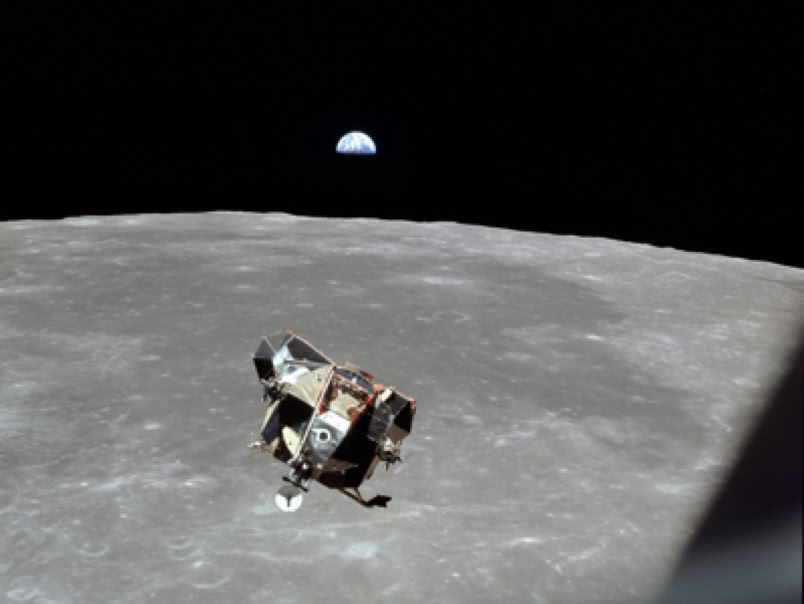
Crap on the Moon
Monday, September 14, 1959
On September 14th, 1959, (UTC) Luna 2 crashed on the Moon impacting the surface at about 7,400mph.
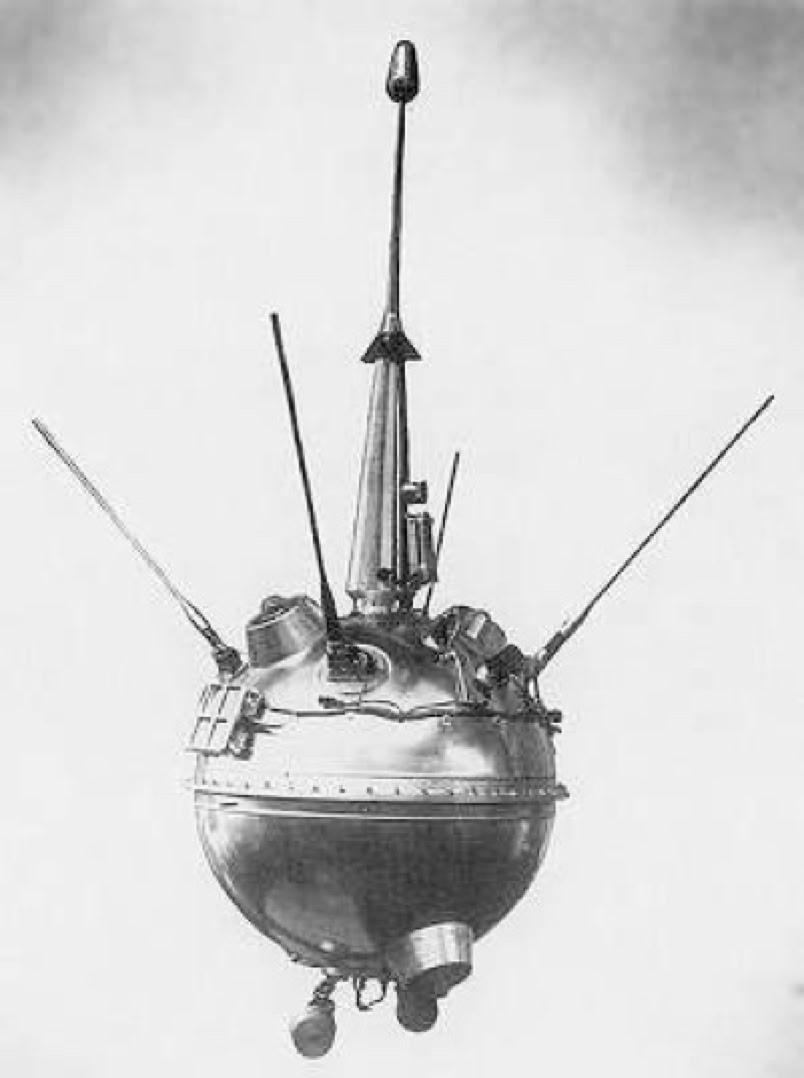
Before impact, the 390 kg probe detonated two pods that scattered pentagonal metal pieces engraved with “СССР СЕНТЯБРЬ 1959” ("USSR SEPTEMBER 1959"). The probe transmitted its last data showing its scintillation and Geiger counters had not detected radioactivity, and then hit the Moon about 0° West and 29° North.
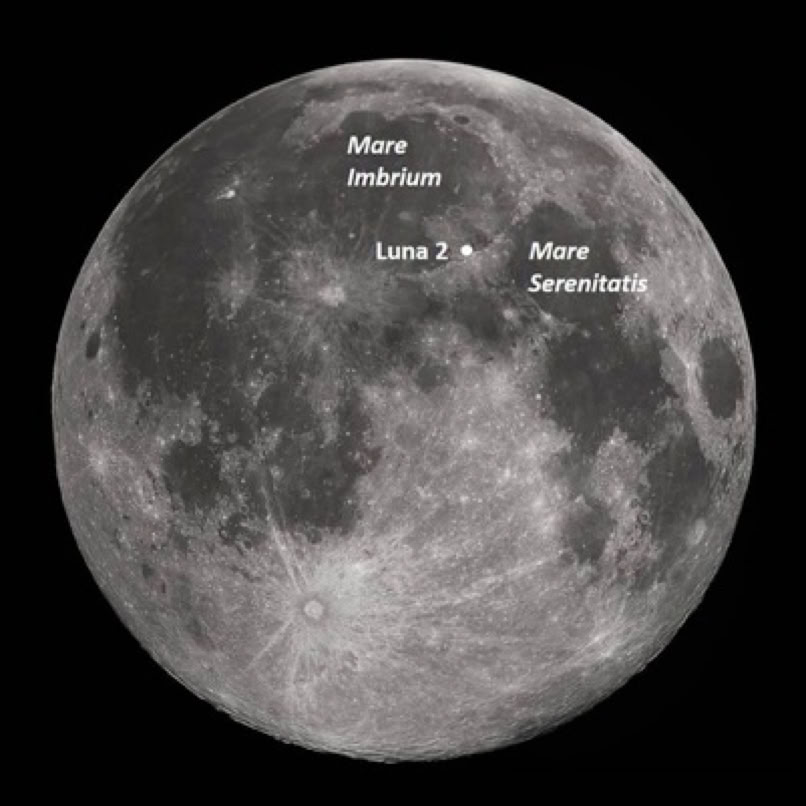
It was the sixth attempt by the Russians to aim for the Moon (Luna 1 missed the moon by 3,725 miles). Luna 2 was the first artificial object ever to reach the Moon. Luna 2 was followed about 30 minutes later by 9 tonnes of the third stage of the Luna 2 Vostok rocket on what is assumed to be pretty much the same spot.
Thus began a long history of humans leaving crap on the Moon, literally... there are dozens of bags of human waste left behind by Apollo! All the weight they brought back was for moonrocks... no room for poop on the return trip.
The Apollo 11 landing site contains many items that will remain preserved as a Heritage Site...
1. Apollo 11 Lunar Module Descent Stage (1)


3. Laser Ranging Retroreflector (LRRR) (1)

4. Passive Seismic Experiment (PSE) (1)

5. Neil Armstrong's Apollo Portable Life Support System (PLSS), Model A7L (1)

6. Neil Armstrong's Apollo Space Boots, Model A7L (2)

7. Edwin (Buzz) Aldrin Jr.'s Apollo Portable Life Support System (PLSS), Model A7L (1)
8. Edwin (Buzz) Aldrin Jr.'s Apollo Space Boots, Model A7L (2)
9. Empty Food Bags (2+)
11. A Gold Replica of an Olive Branch, Traditional Symbol of Peace (1)

13. Commemorative Plaque attached to the Lunar Module Descent Leg. "Here men from the planet Earth first set foot upon the Moon. July 1969, A.D. We came in peace for all mankind." The plaque is signed by the Apollo 11 crew and President Richard M. Nixon. (1)

14. TV Camera (1)


16. Tongs (1)

17. Small Scoop (1)
18. Scongs (1)

20. Trenching Tool (1)
21. Camera (Hasselblad El Data) (1)

22. Armrests (4)
23. Mesa Bracket (1)
24. Solar Wind Composition Staff (1)

25. Handle of Contingency Lunar Sample Return Container (1)
26. Medals Commemorating Two Dead Cosmonauts (2)
27. Document Sample Box Seal (1)
28. Storage container (empty) (1)
29. Hasselblad pack (1)
30. Film Magazines (2+)
31. Filter, Polarizing (1 )
32. Remote Control Unit (PLSS) (2)
33. Defecation Collection Device (4)
34. Overshoes, Lunar (2)
35. Covers, Pga Gas Connector (2)
36. Kit, Electric waist, Tether (1)
37. Bag Assy, Lunar Equip.conveyor & waist tether (1)

38. Conveyor assy, Lunar Equipment (1)
39. Bag, Deployment, Life line (1)
40. Bag, Deployment, Lunar equipment conveyor (1)
41. Life line, Lt. wt. (1)
42. Tether, Waist, EVA (4)
43. Food Assembly, LM (4 man days) (1)
45. Lens, TV wide angle (1)
46. Lens, TV lunar day (1)
47. Cable assembly, TV (100 ft.) (1)

48. Adapter, SRC/OPS (2)
49. Cannister, ECS LIOH (2)
50. Urine collection assembly, small (2)
51. Urine collection assembly, large (2)
52. Bag, Emesis (4)
53. Container assembly, Disposal (1)
54. Filter, oxygen bacterial (1)
55. Container, PLSS Condensate (1)


58. Bag, Lunar Equipment Transfer (1)
59. Pallet assembly #1 (1)
60. Central Station (1)
61. Pallet Assembly #2 (1)
62. Primary structure assembly (1)
63. Hammer (1)

64. Gnomon (Excludes mount) (1)

65. Tripod (1)

66. Handle/cable assembly (cord for TV camera) (1)
67. York mesh packing material (1)

69. Core tube bits (2)
70. SRC seal protectors (2)
71. Environmental sample containers "O" rings (2+)
72. Apollo Lunar Surface Close-up Camera (1)

73. Lunar equipment conveyor (1)
74. ECS canister (1)
75. ESC bracket (1)
76. OPS brackets (2+)
77. Left hand side stowage compartment (1)
78. Footprint

79. Extension Handle

80. Stainless steel cover (9 x 7 5/8 inches x 1/16 inch thick)
81. Plastic covering for Flag
82. 8 foot aluminum tube
83. 2 + retaining pins for flag and staff storage
84. Insulating blanket
85. Small aluminum capsule
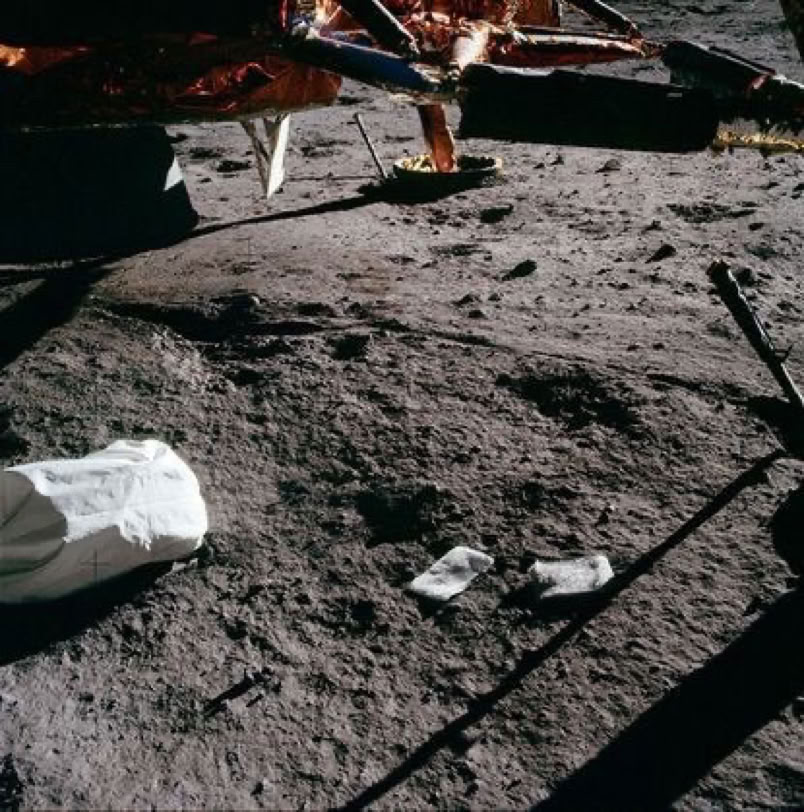
And there are many other items scattered about the other Apollo sites that are part of Heritage sites...
• 10 other pairs of boots
• TV cameras
• film magazines
• 96 bags of urine, feces, and vomit
• numerous Hasselbad cameras and accessories
• several improvised javelins
• various hammers, tongs, rakes, and shovels
• backpacks
• insulating blankets
• utility towels
• used wet wipes
• personal hygiene kits
• empty packages of space food
•a photograph of Apollo 16 astronaut Charles Duke's family

•a feather from Baggin, the Air Force Academy's mascot falcon, used to conduct Apollo 15's famous "hammer-feather drop" experiment
• a small aluminum sculpture, a tribute to the American and Soviet fallen astronauts who died in the space race - left by the crew of Apollo 15
•a silver pin, left by Apollo 12 astronaut Alan Bean
•a medal honoring Soviet cosmonauts Vladimir Komarov and Yuri Gagarin
The discarded falcon feather lies among other trash; a relic from Dave Scott’s test of Galileo Galilei’s prediction that a hammer and a feather would fall at the same rate without air. “How ‘bout that? That proves Mr Galileo was correct in his findings... Superb!” https://youtu.be/oYEgdZ3iEKA
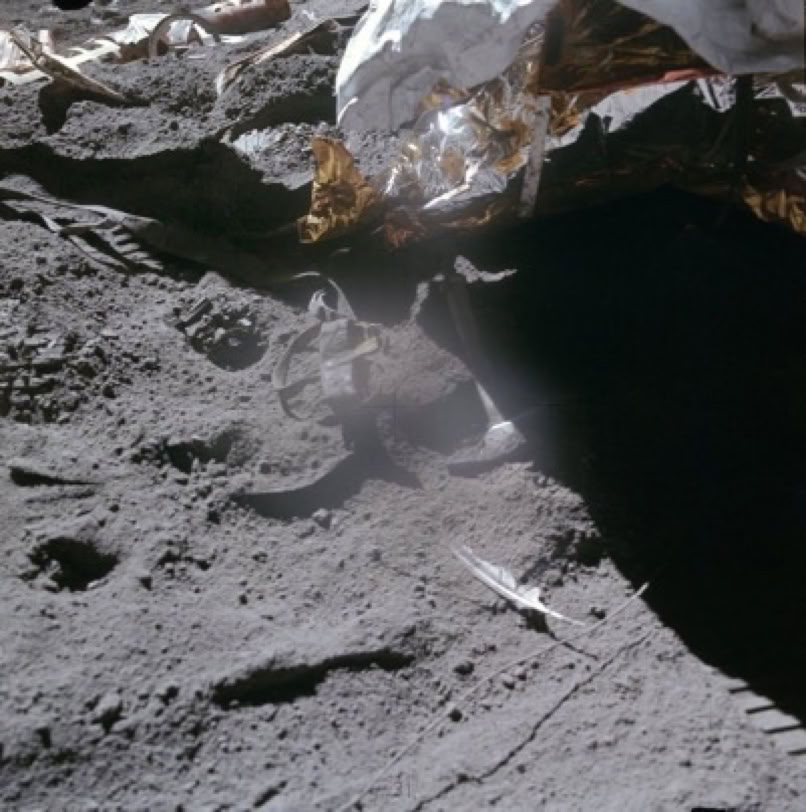
So, what of all that poop? Does it still contain any living bacteria? NASA apparently wants to find out if anything has survived the 50 years of UV irradiation and the boiling heat of all that unfiltered sunshine.
Being as the Apollo 13 Lunar Module was burned up in Earth’s atmosphere, the S-IVb third stage rocket is the only lunar artifact from Apollo 13; what’s left of it is pictured below:

Wikipedia has a jolly good list of everything that mankind has kindly left on the lunar surface...
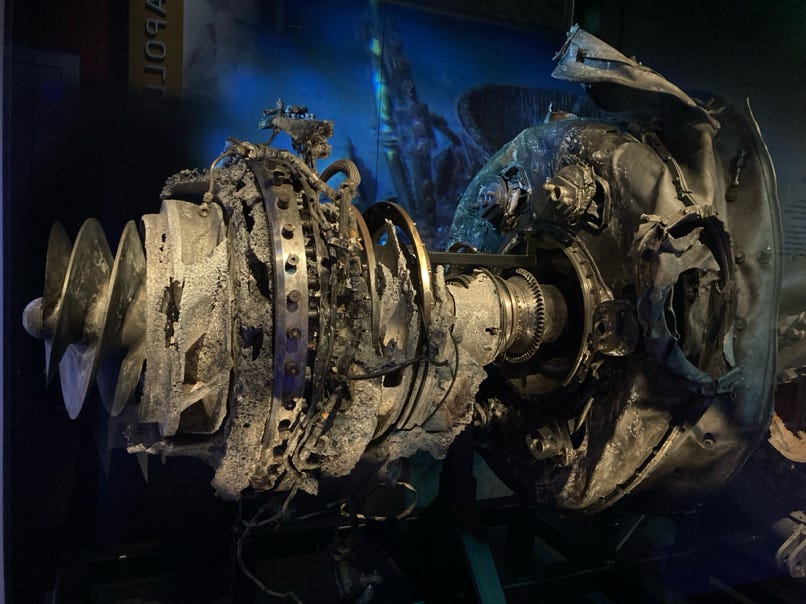
Jeff Bezos’ expeditions in 2014 to recover Apollo first stage F1 engines from under the Atlantic Ocean make you think of salvaging what’s been abandoned on the Moon.

Parts of Apollo 11’s F1 engines are on display at the Air and Space Museum in Washington, DC.
The 1967 Outer Space Treaty and NASA’s 2011 “Recommendations” for private craft operating near Apollo sites
means that NASA can claim the landing sites are Heritage Sites.
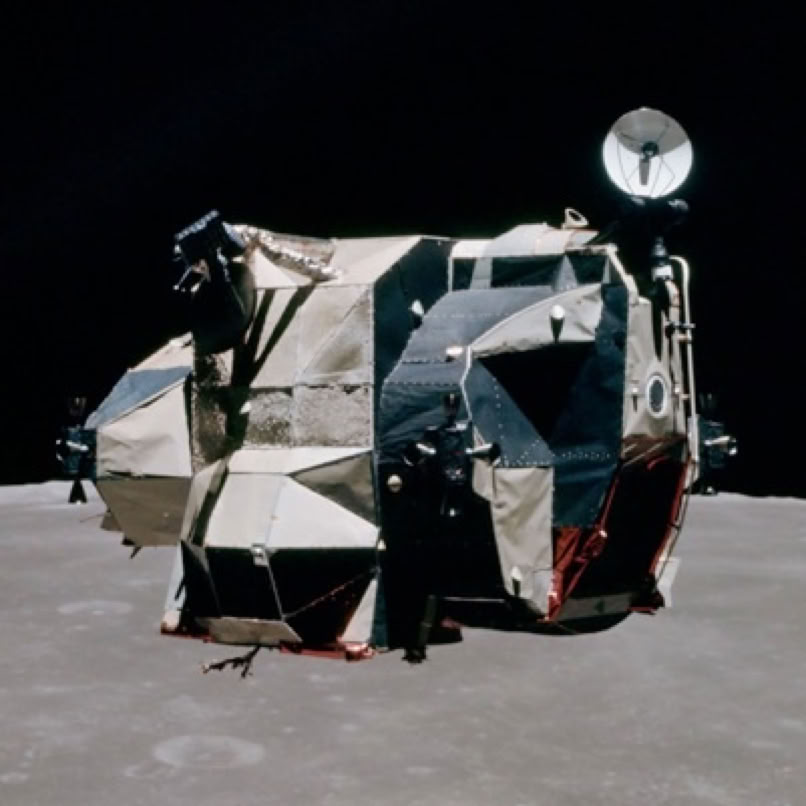
An Apollo ascent stage is the part of the LM that takes the astronauts back to the command service module. The ascent stage is then tossed back to the lunar surface. NASA also claims the ascent stages are Heritage Sites, but the legality of that claim is dubious due to the fact that these were crashed onto the lunar surface, the ascent stages of Apollos 11 and 16 are actually lost; they have been abandoned and, so, sovereignty no longer applies.
If only we could get up there and salvage stuff. I would love a piece of the Apollo 16 ascent stage “Orion” if they ever figure out where it crashed.
We could also salvage the descent stage of Apollo 10 that was crashed onto the moon - that is the only descent stage outside of a Heritage Site that could be salvaged. Here’s Snoopy on its way down to about 47,000 feet of the lunar surface.
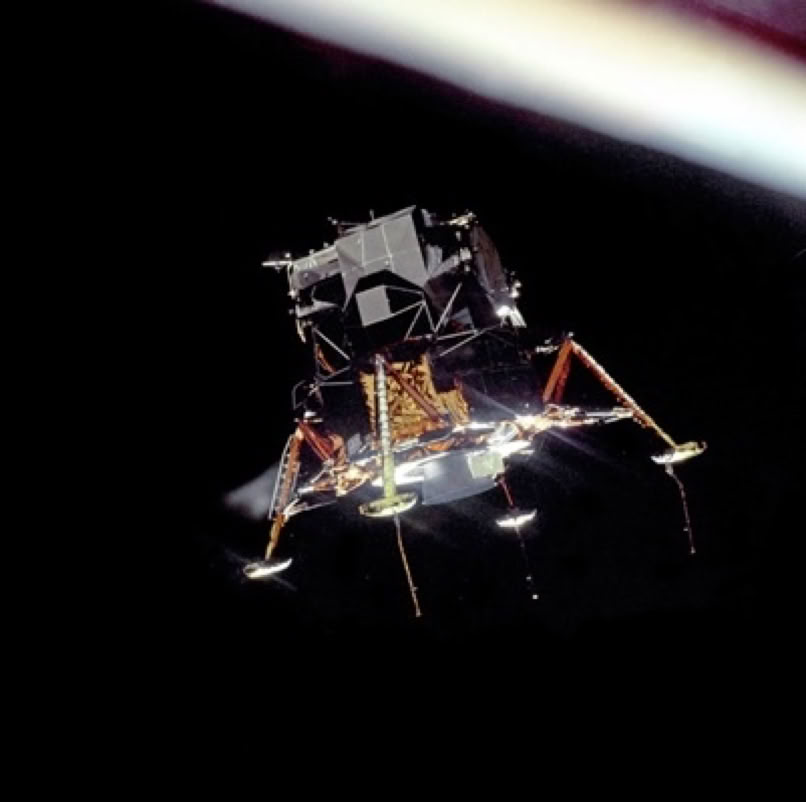
The legs were jettisoned to crash on the moon. The ascent stage of Apollo 10‘s “Snoopy” was fired off to orbit the Sun, and is still out there somewhere (possibly what is known as small Earth-crossing asteroid 2018AV2). At least it’s not littering the Moon!
But now there is really is life on the Moon! On 11 April 2019, the Israeli lunar probe Beresheet crashed onto the moon carrying a payload including Tardigrades.
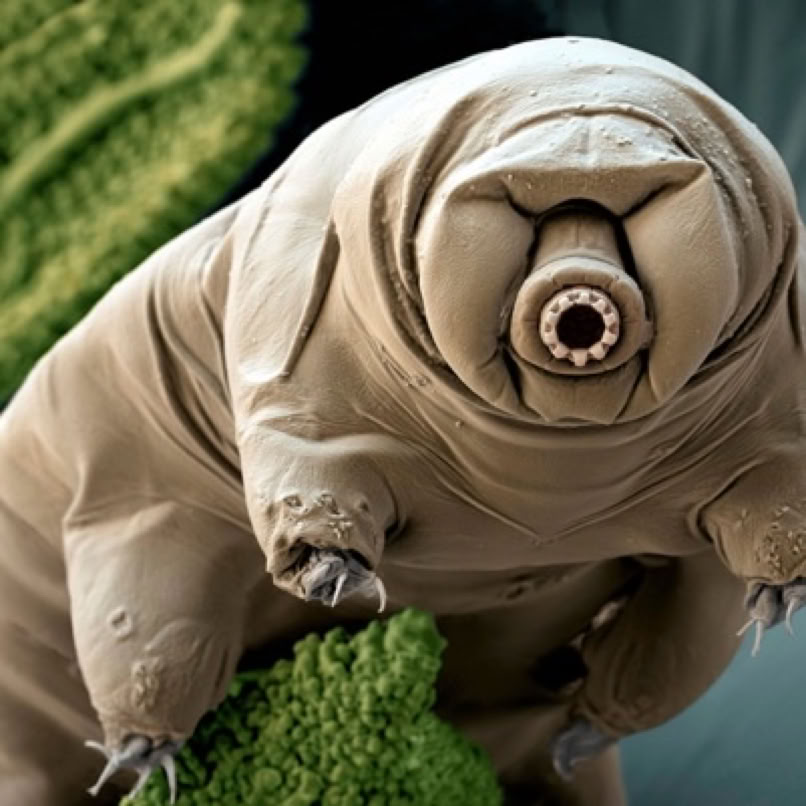
These poor little mites, also known as water bears, are about 0.5mm long, they are virtually indestructible and can survive being desiccated for years and years! Now there are hundreds of these little litter bugs on the lunar surface. The site was snapped by LRO a couple of weeks after the crash:


space.com published a nifty guide to the scrap dealer’s paradise that the Moon has become:

Thanks for this partly-plagiarized blog entry go to space.com, Wikipedia, and my good friend Mrs. Nesbit.